📄 Digital book in PDF · read it on your phone or print it
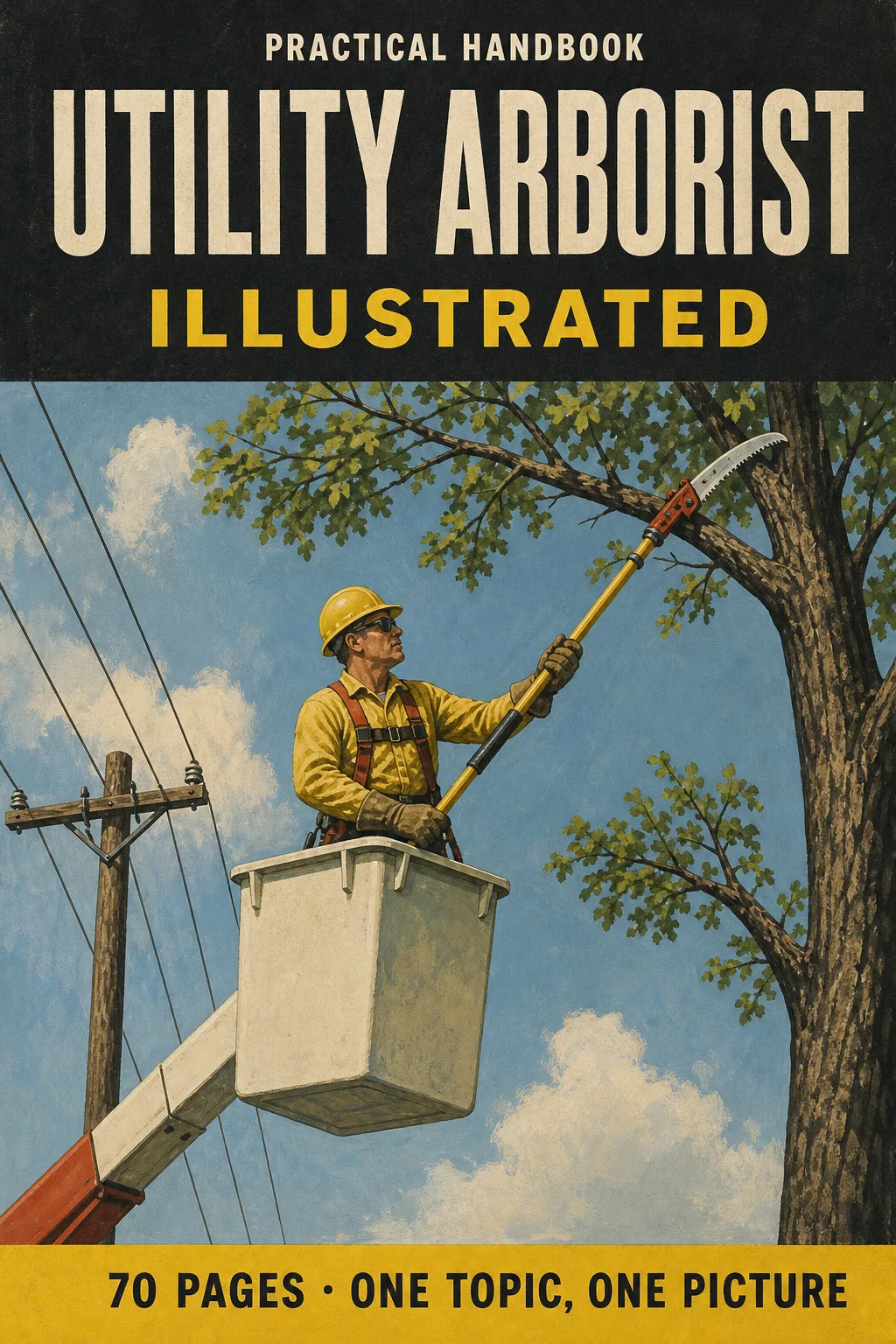
For line clearance arborists and anyone studying for the ISA Utility Specialist exam. Approach distances, through and side clearing, natural targets, storm work and the job briefing: one topic per page, the drawing first, then what to remember. 70 illustrated pages.
🔒 Secure checkout · PDF by email · 30-day guarantee
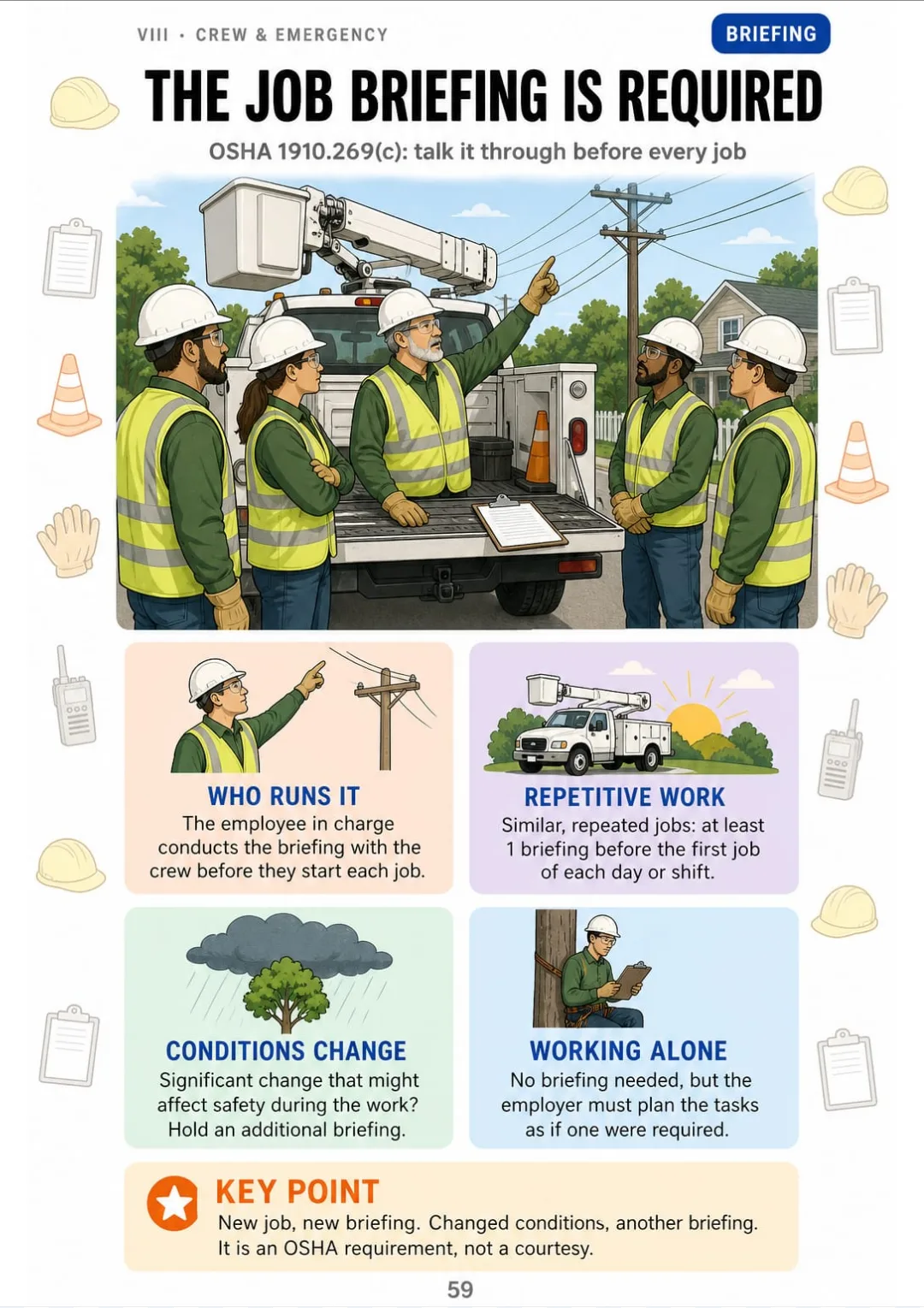
Every page has one big drawing and a box with the distances, rules and steps you need to know:


Swipe to see more →
These are real pages from the book. The table of contents is the full one: 9 parts and 66 topics.
You're in the bucket next to a primary line, and the foreman calls up: how close can you work here? You know there's a number. It just won't come.
Last night you read it in OSHA 1910.269: Tables R-3, R-6, R-7 and R-8, voltage ranges, footnotes, corrections. It was all columns and paragraphs, and none of it tied the number to the wire in front of you.

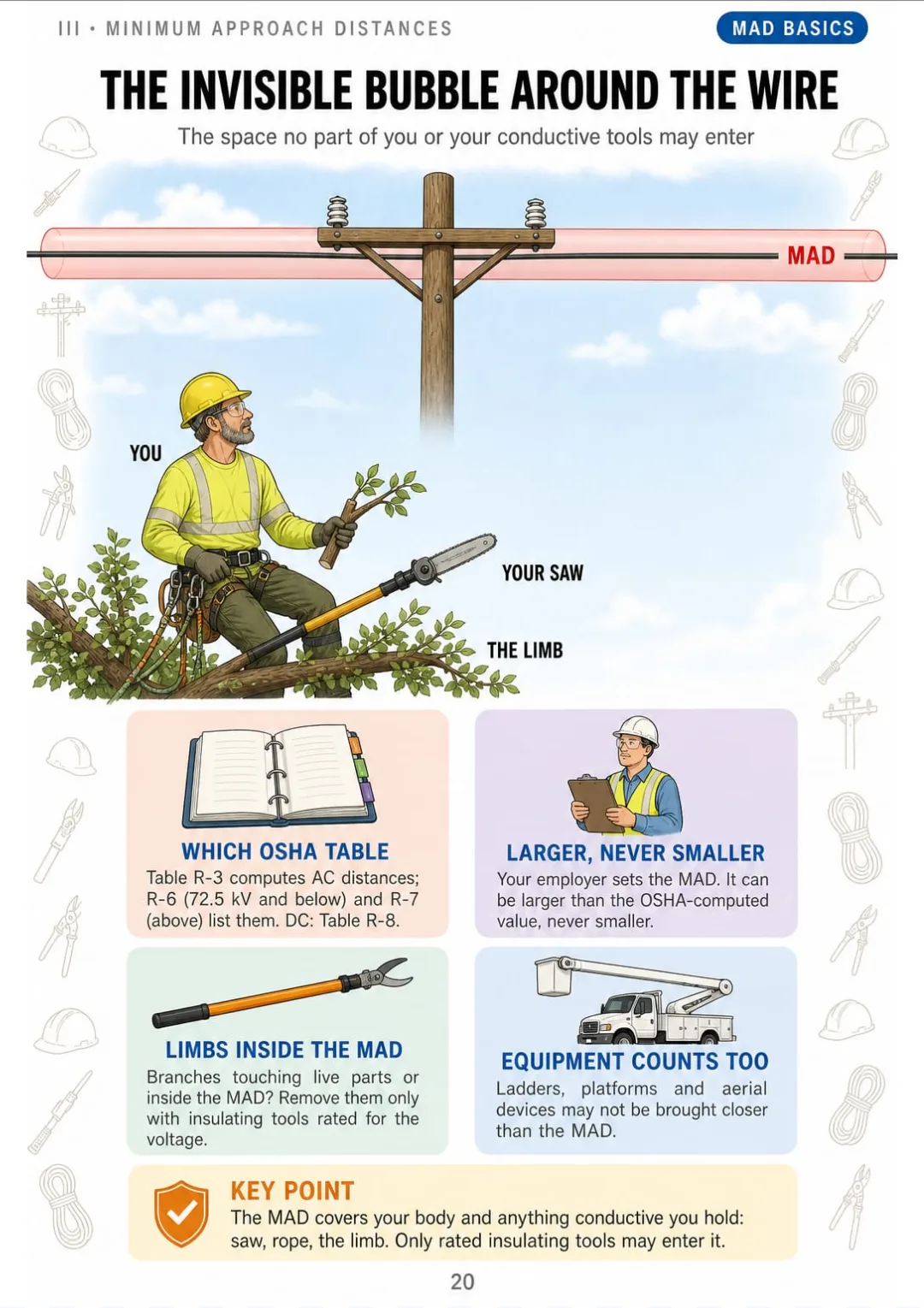
In the book it's one page. The wire is drawn with an invisible bubble around it, you're drawn at its edge, and a box tells you which table applies and the rule that matters: your employer's distance can be larger, never smaller.
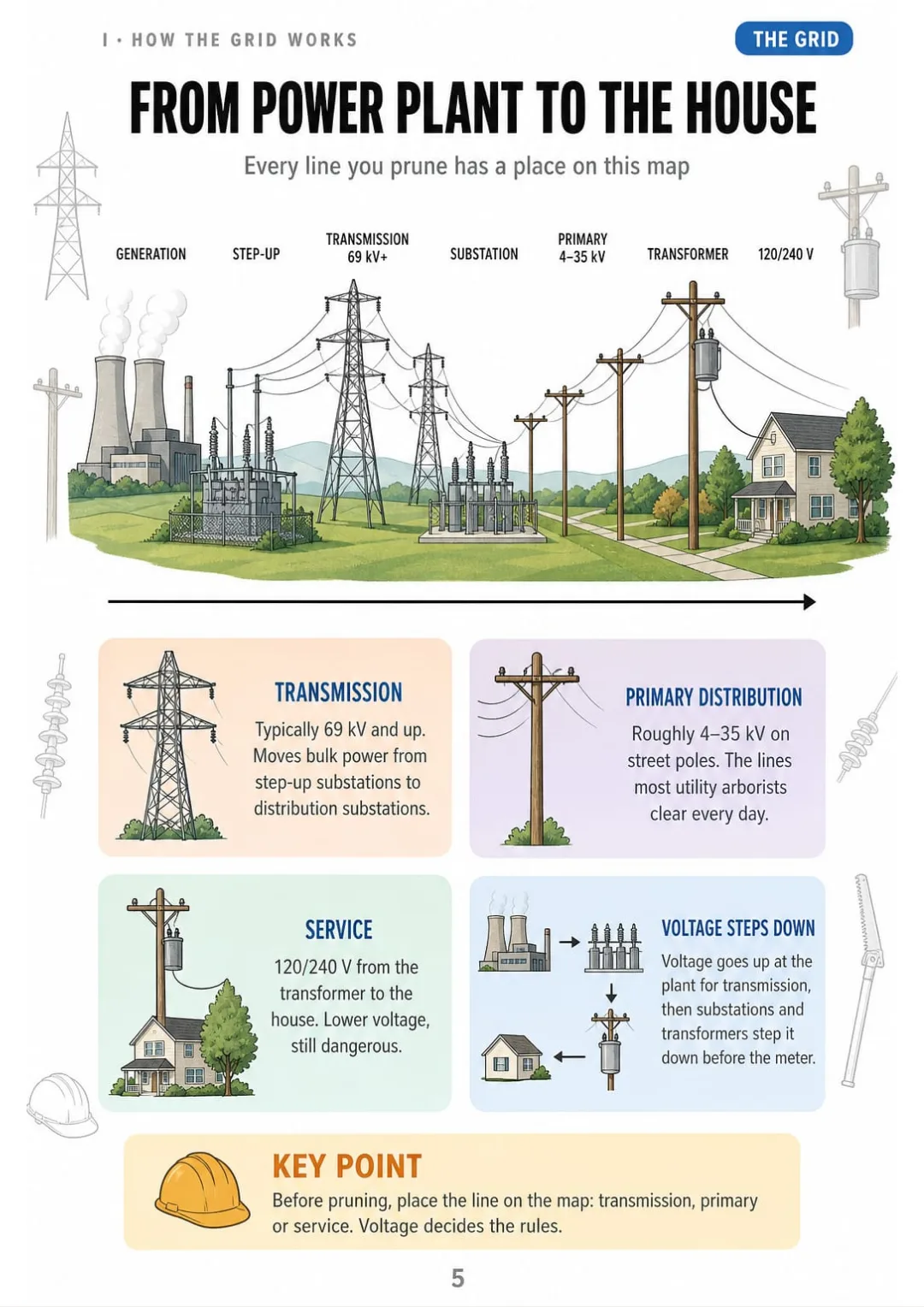
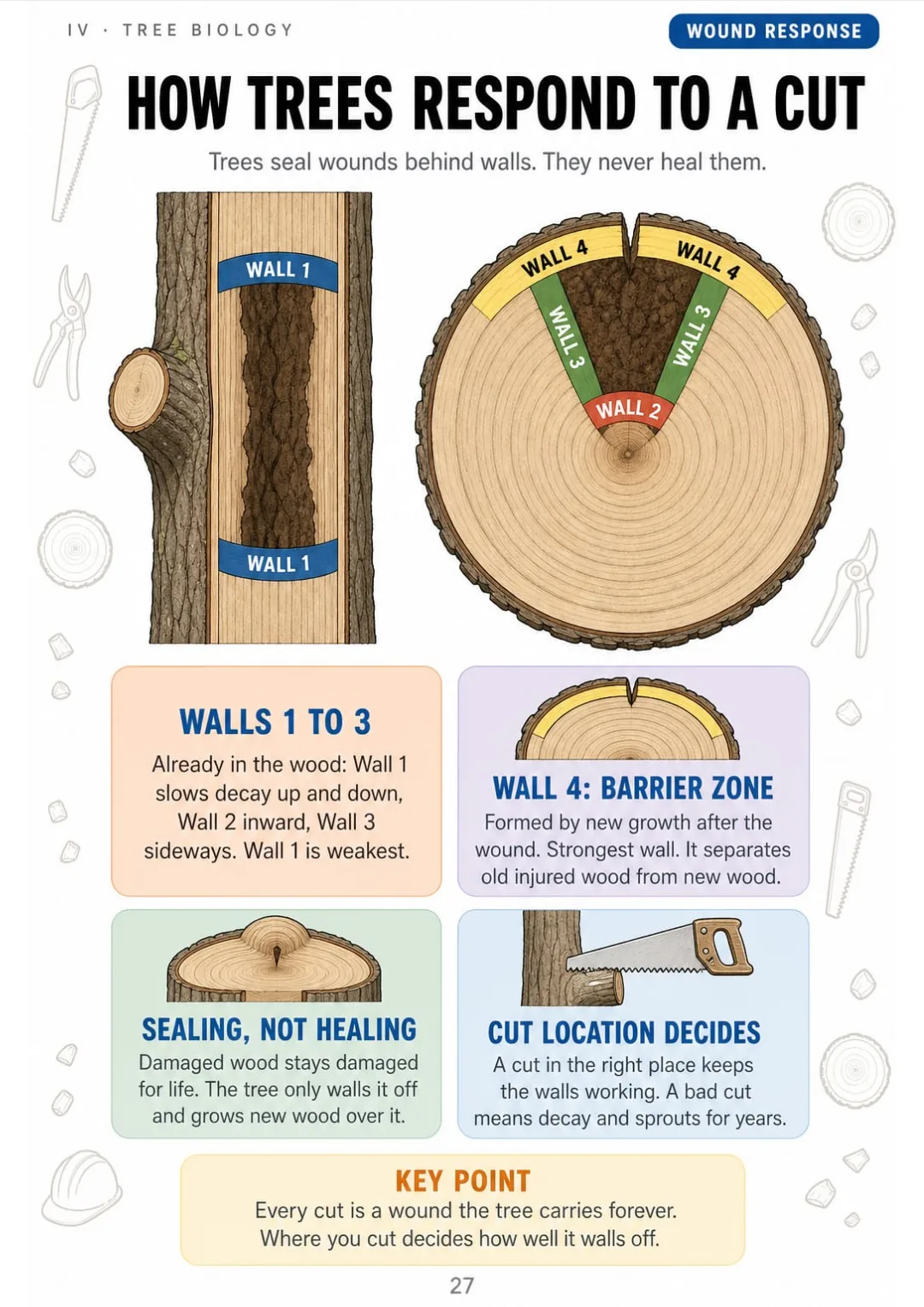
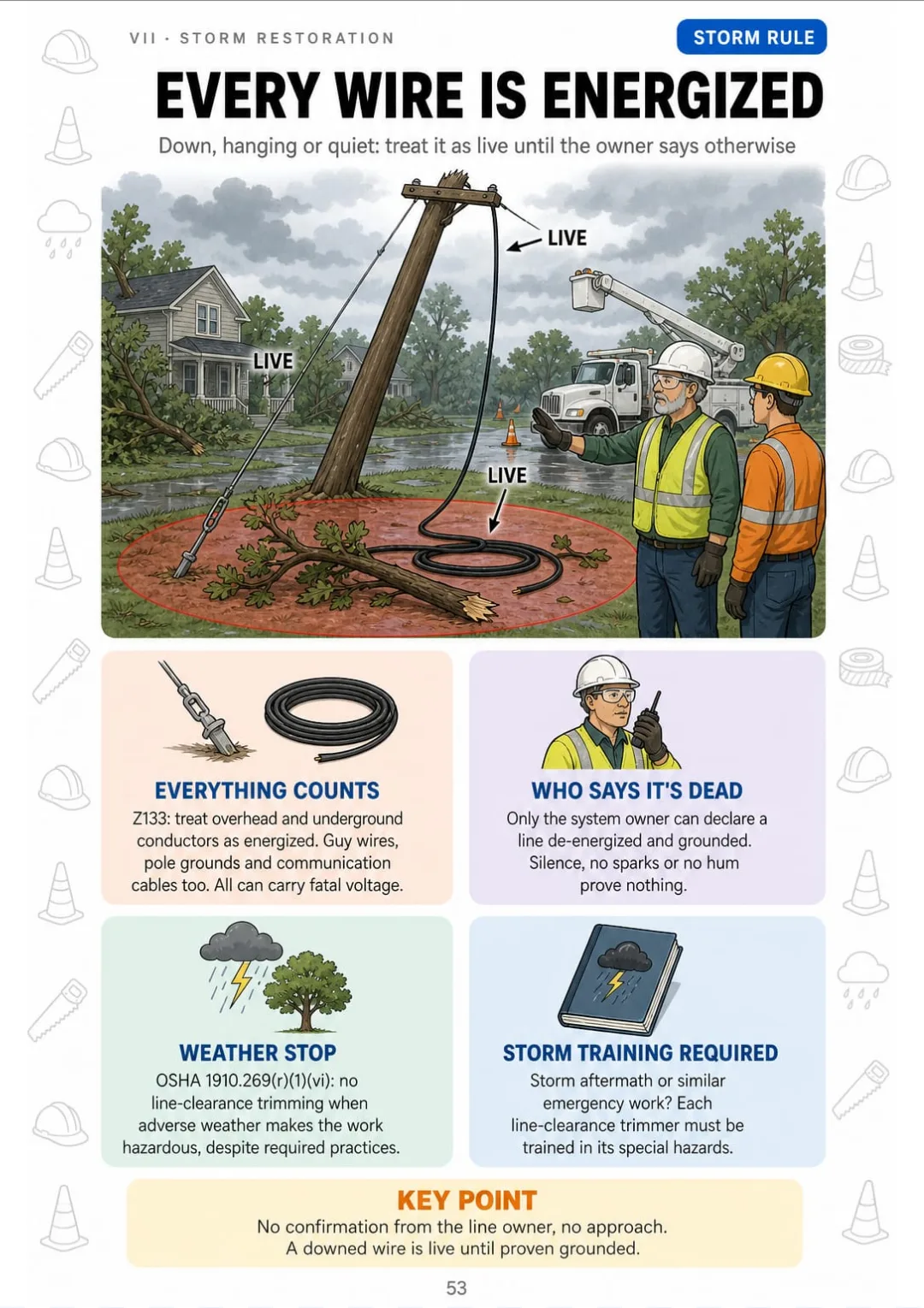
The rest of the book works the same way: the grid from plant to service drop, how a tree seals a cut, directional pruning back to laterals, every downed wire treated as energized, the job briefing. Each one on its own page.
Next time someone asks, you picture the bubble before the table. You've got the number, and you don't need to go back to the manual.

How the grid works, the rules, minimum approach distances, tree biology, directional pruning, programs and IVM, storm restoration, crew leadership and a final review: 70 pages, all illustrated.
Think of it this way:
You're giving the tailboard before the first cut. A new trimmer asks why that limb goes back to a lateral instead of just getting shortened. You need the answer in one sentence, right there on the job.
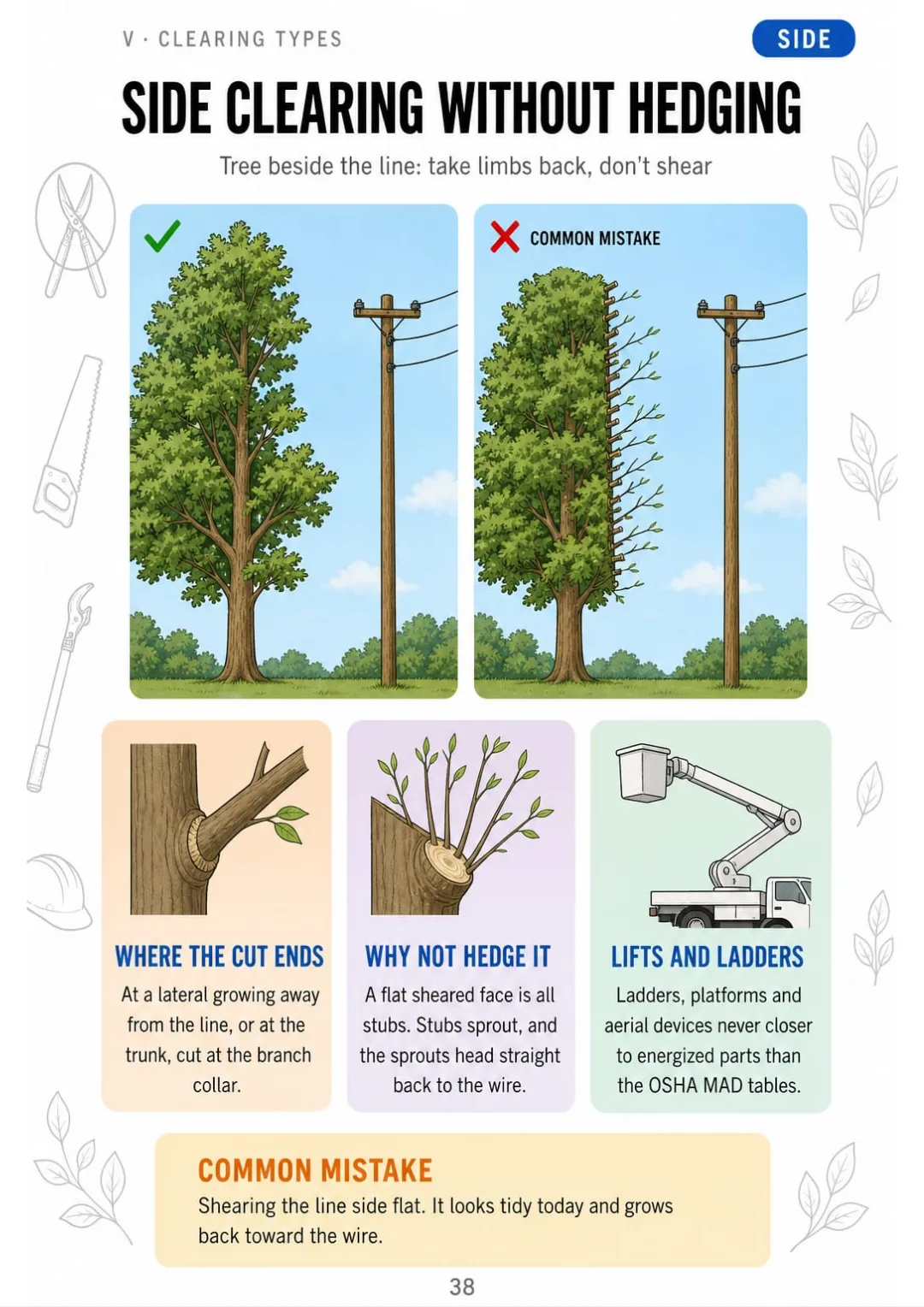
In the book you open the directional pruning page and see one tree, before and after: the limbs growing toward the line taken back to laterals growing away from it.

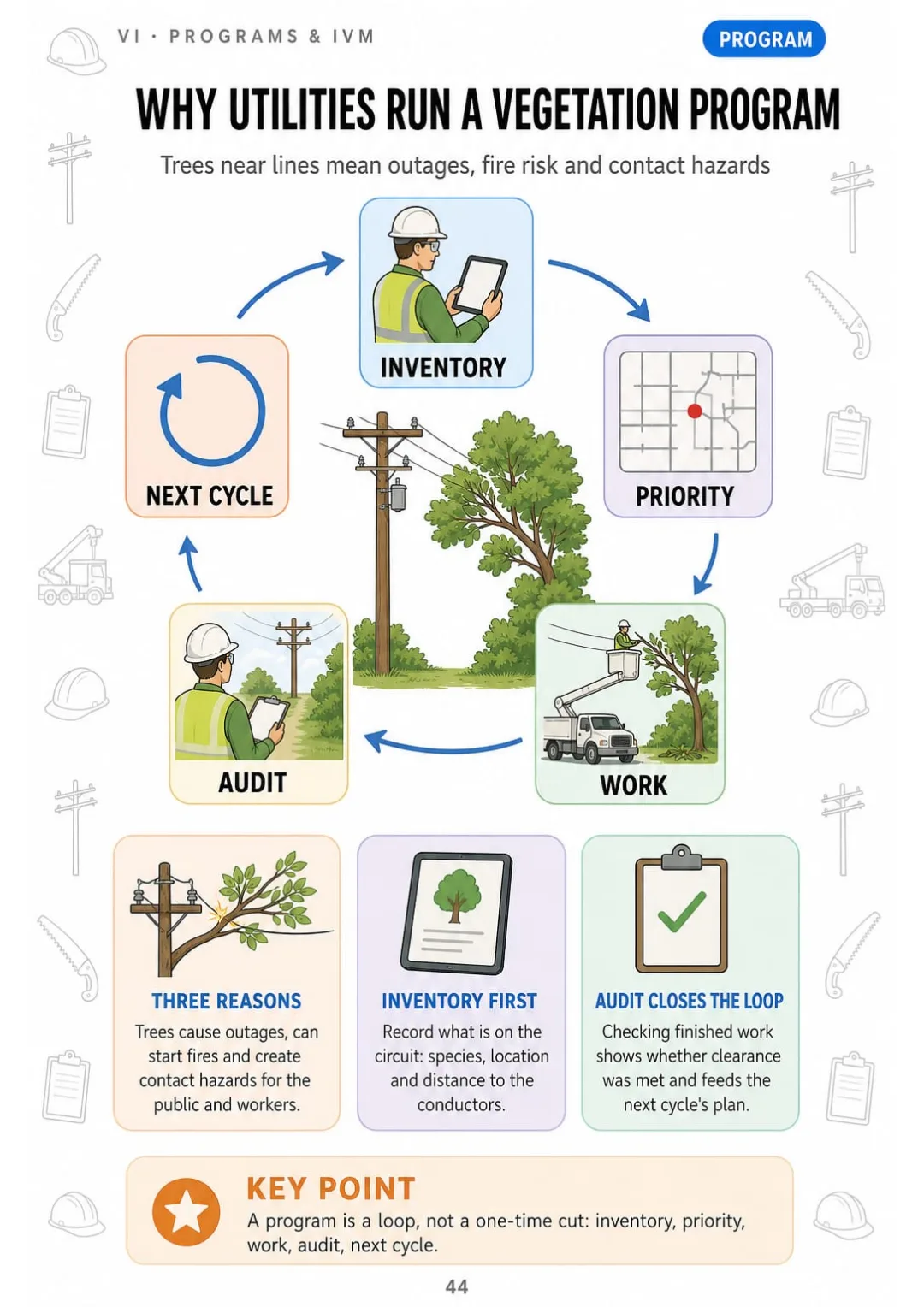
Same with the rest: the grid from plant to house, the invisible bubble around the wire, how a tree seals a cut, the vegetation program loop, every downed wire treated as energized. Each one on its own page.
Utility Arborist Illustrated is 9 parts and 66 topics, all drawn, and it ends with the numbers to know, a pre-climb and pre-lift checklist and how to study for the utility specialist exam.
What you see drawn, you don't have to memorize.
Plant to house, transmission vs. distribution, the pole top to bottom, phases and voltages, the current path, indirect contact, step and touch potential, sag and sway.
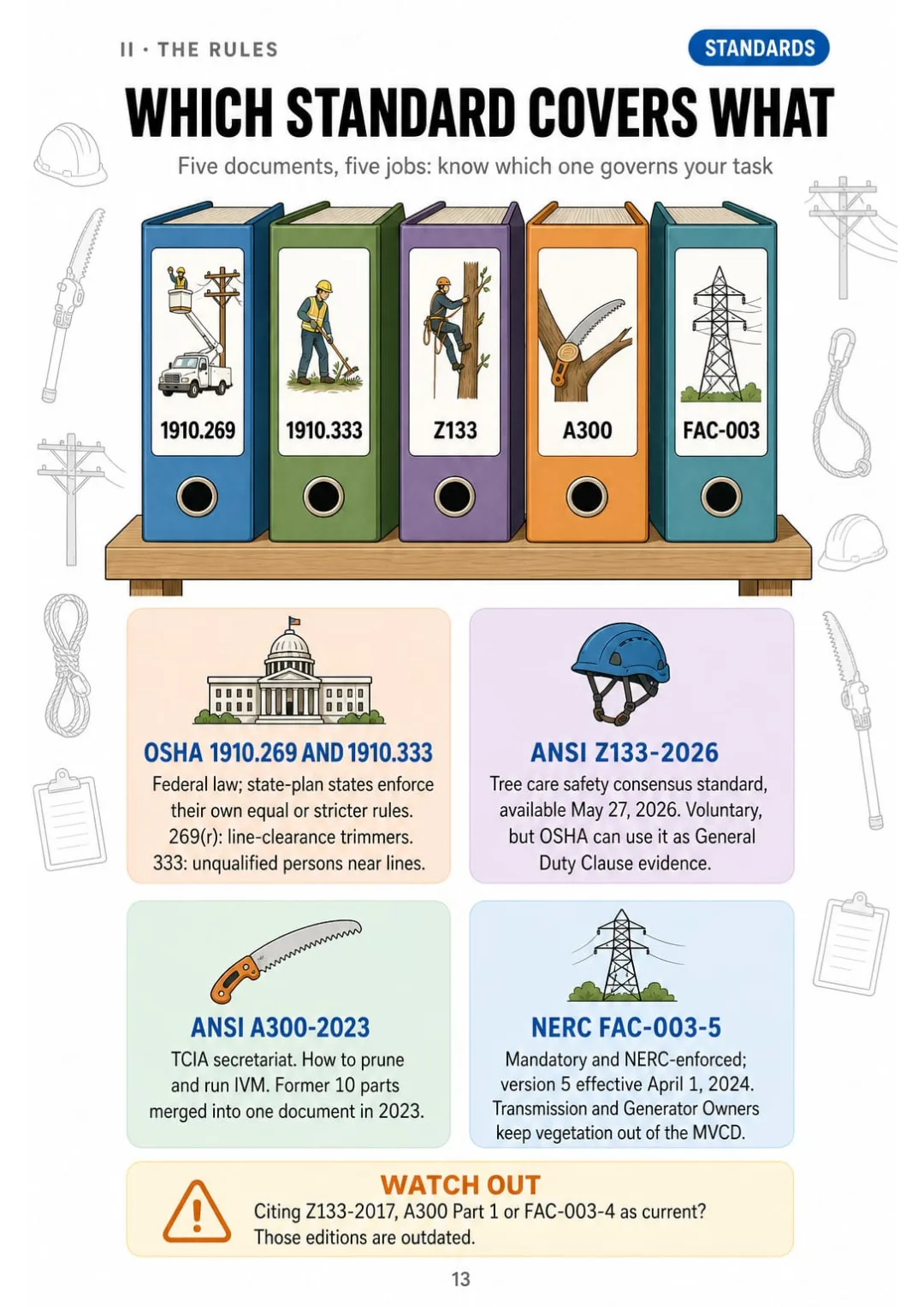
Which standard covers what, qualified line-clearance arborist vs. everyone else, the 10-foot rule, the second trimmer, finding the voltage, PPE and insulated tools.
What a MAD is, how to read the table, phase-to-ground vs. phase-to-phase, low voltage, inadvertent movement, aerial lifts and climbing near lines.
How trees respond to a cut, collar and branch bark ridge, the three-cut method, removal vs. reduction vs. heading, natural targets, why topping fails, growth rates, defective trees.
Directional pruning, the field decision in the same order, through, side, under and overhang clearing, removal vs. pruning, clearance distance, moving a limb off the line.
Why utilities run a program, cycle planning, hot spots, IVM, wire and border zones, herbicide methods, transmission corridors and FAC-003, mechanical clearing, property owners.
Every wire is energized, backfeed, spring poles and limbs under tension, who does what with trees on lines, other storm hazards, mutual assistance.
The required job briefing and what it covers, drop zones and communication, first aid and CPR, electrical contact in the first minutes, aerial and tree rescue.
The whole book on one page, numbers to know, which clearing type, common mistakes, the pre-climb and pre-lift checklist and how to study for the exam.
At the end of the book: The whole book on one page, the numbers to know and a pre-climb and pre-lift checklist.
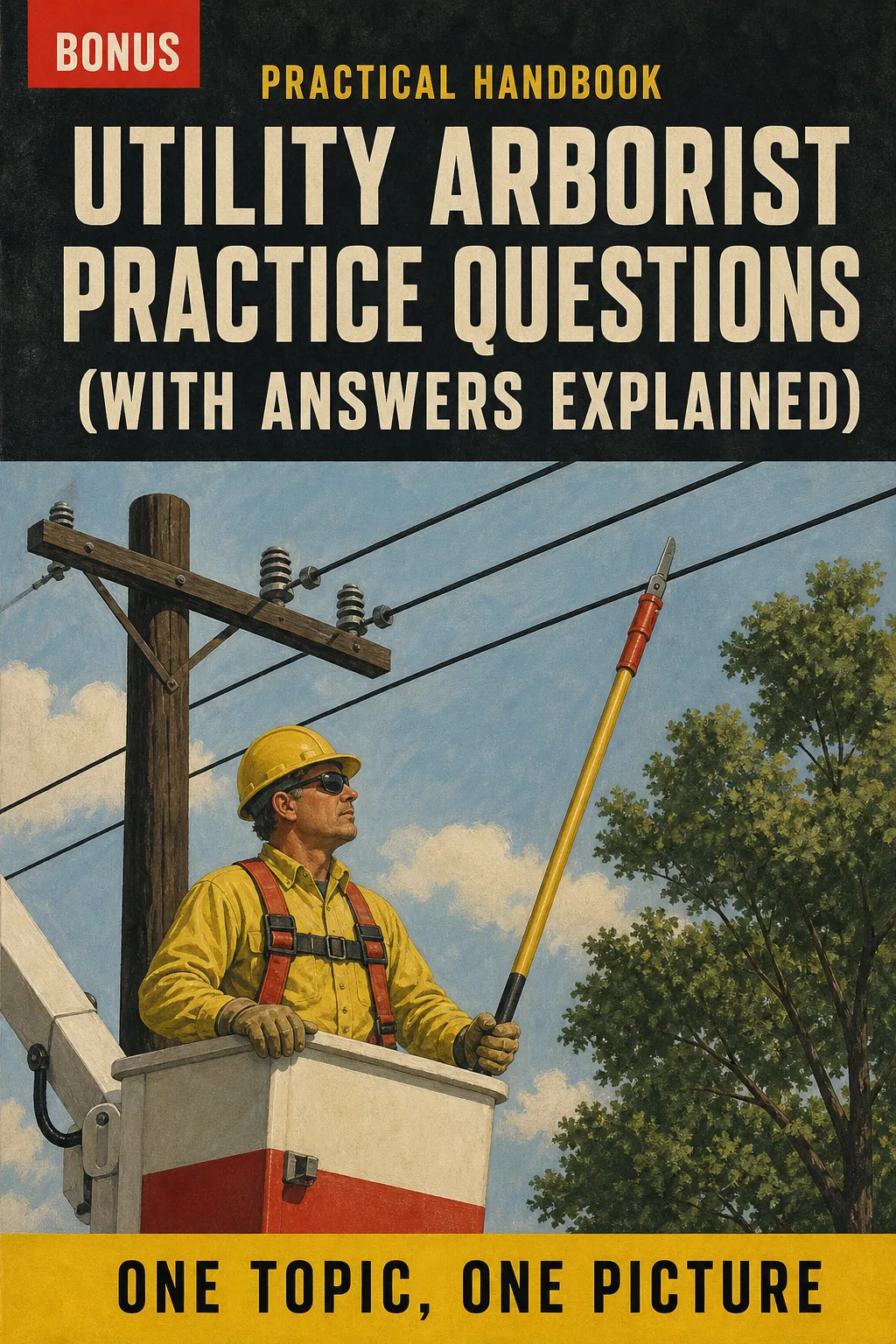
Test yourself with exam-style questions on approach distances, pruning cuts and line clearance rules, and see why each answer is right.

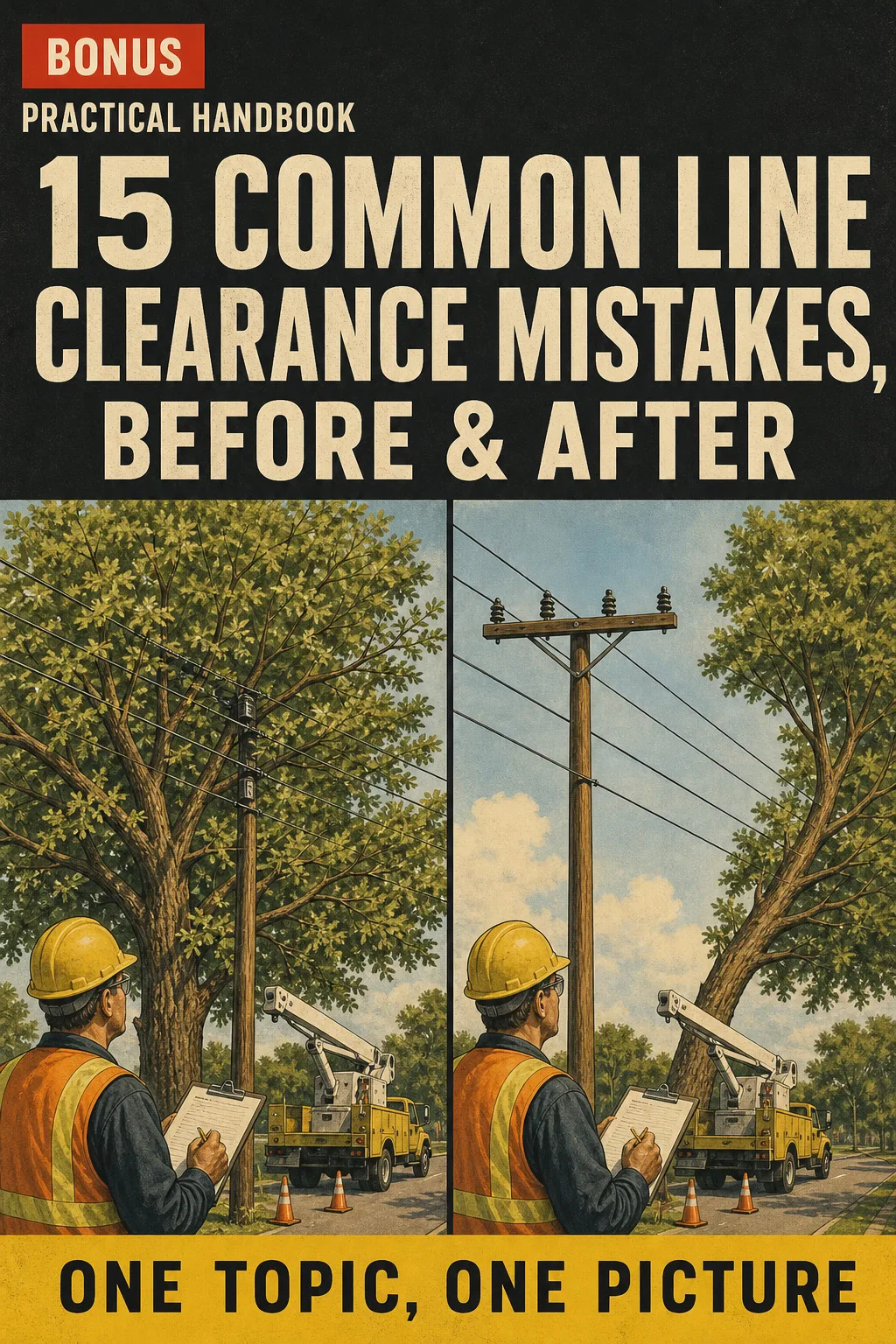
See the cuts, distances and job-site habits that go wrong most often, drawn side by side with the right way to do them.
📄 This is a digital PDF book sent to your email: nothing is printed or shipped.
PDF by email: We email you Utility Arborist Illustrated as a PDF, together with the two free books. It's a single payment: no installments, no extra charges.
After a long day or a storm shift, you open one page and see one topic drawn, in the same order every time, from the substation to natural targets.
The numbers to know, the review page and the practice questions show you what's solid and what still needs another look.
Print the job briefing or approach distance page and show it at the tailboard, so new trimmers see the rule instead of just hearing it.
📄 This is a digital PDF book sent to your email: nothing is printed or shipped.
Try Utility Arborist Illustrated for 30 days, bonus books included.
We refund everything if the file won't open, if the book isn't what you see here, if you were charged twice or if the email doesn't arrive. Just email us.
You pay once. No subscriptions.
Yes. It's not a beginner's book: it puts the grid, the standards and the clearance decisions you already deal with in one order, drawn, so you can review them for the certification or explain them to your crew.
From OSHA 29 CFR 1910.269 (checked against the current eCFR text), ANSI Z133 and ANSI A300 (current editions, with the edition year listed on the book's sources page), NERC FAC-003 for transmission and the ISA Utility Specialist exam content outline. It's written for U.S. rules, not a generic arborist book.
No. It's an independent illustrated study book, not published or endorsed by OSHA, ANSI, ISA, NERC or any utility. It doesn't give you a certificate, a qualification or CEUs: it helps you study for them.
No. It doesn't replace qualification training, on-the-job training or your employer's and utility's procedures. It helps you study and review them.
No. They're written for this book, in exam style, with each answer explained. They're not official exam questions.
The book and the 2 bonus books come as PDFs by email, to the address you enter at checkout.
No. It's a one-time payment. No subscription.
Yes. It's a PDF ready to print, so you can print it at home or at a print shop and keep it in the truck.
You have 30 days. We refund everything if the file won't open, if the book isn't what you see on this page, if you were charged twice or if the email doesn't arrive: just email us.
No more rereading tables that don't stick.
Approach distances drawn around the wire, with the table that applies right beside them.
You show up to the exam or the job site knowing where everything is.
Drawings make studying faster.
The book is right below.
One-time payment: US$ 27 · Guarantee: 30 days · PDF by email
YES, I WANT UTILITY ARBORIST ILLUSTRATED FOR US$ 27📄 This is a digital PDF book sent to your email: nothing is printed or shipped.